Gdańsk, Poland
Krematorium concept, stanislaw sudnowski
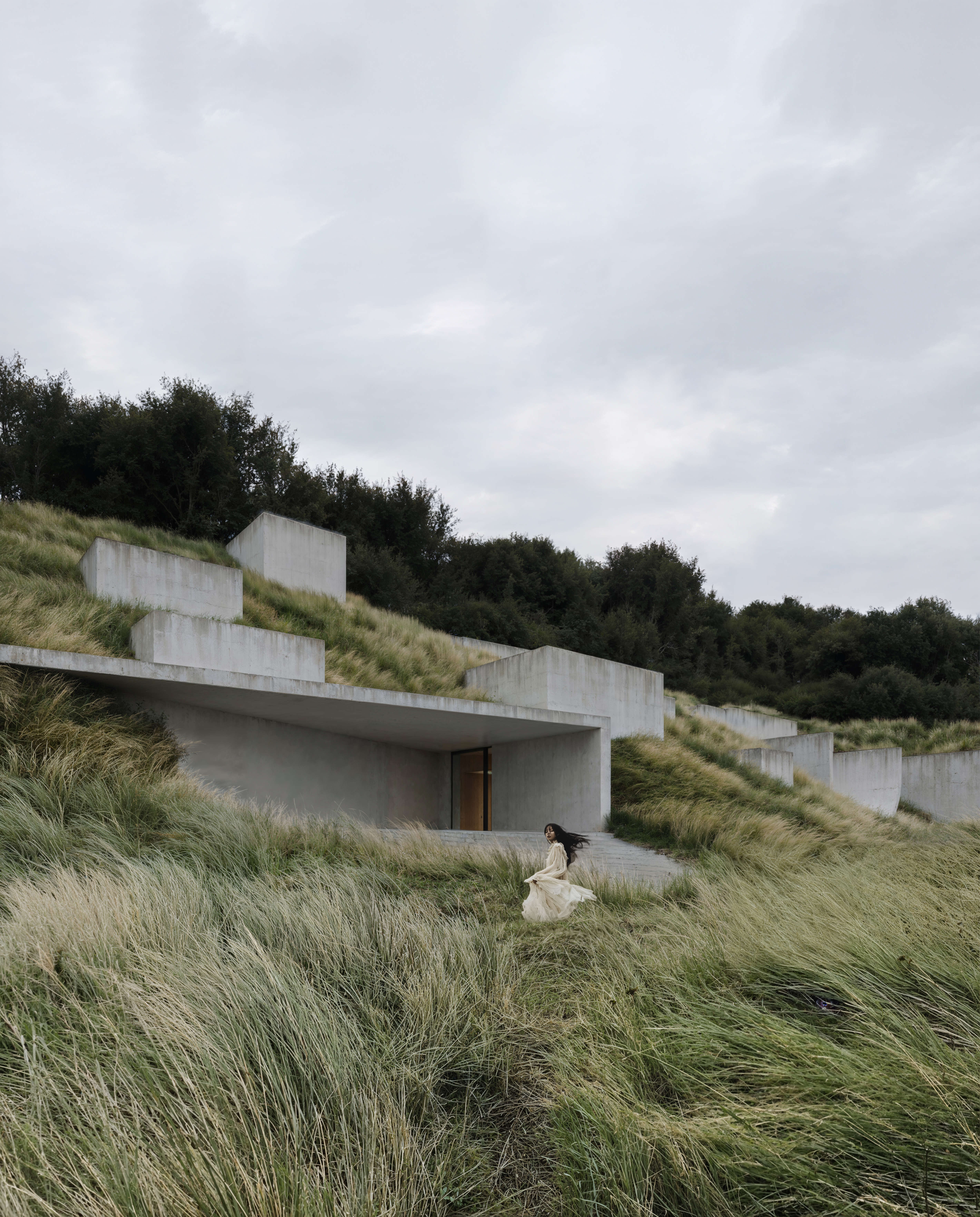
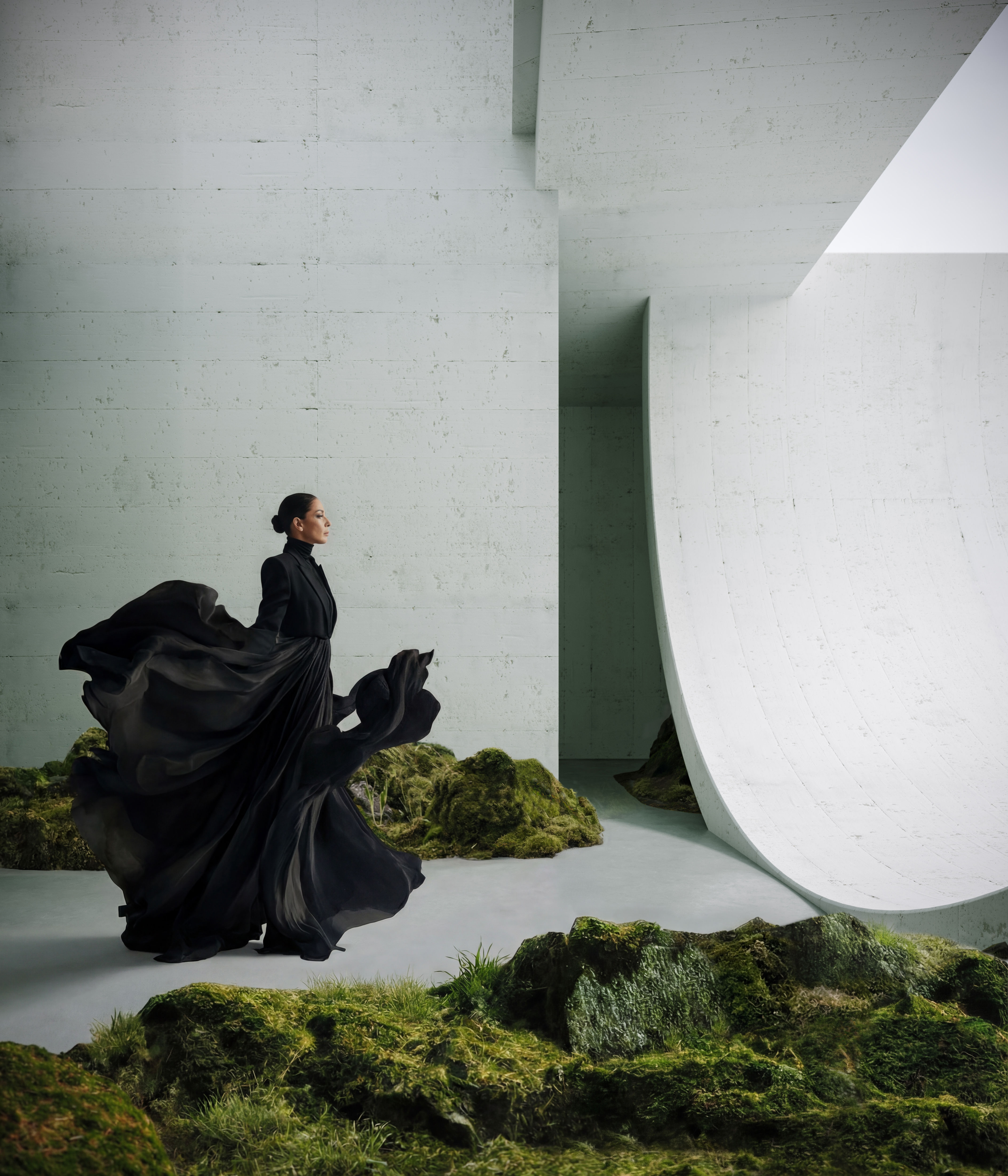
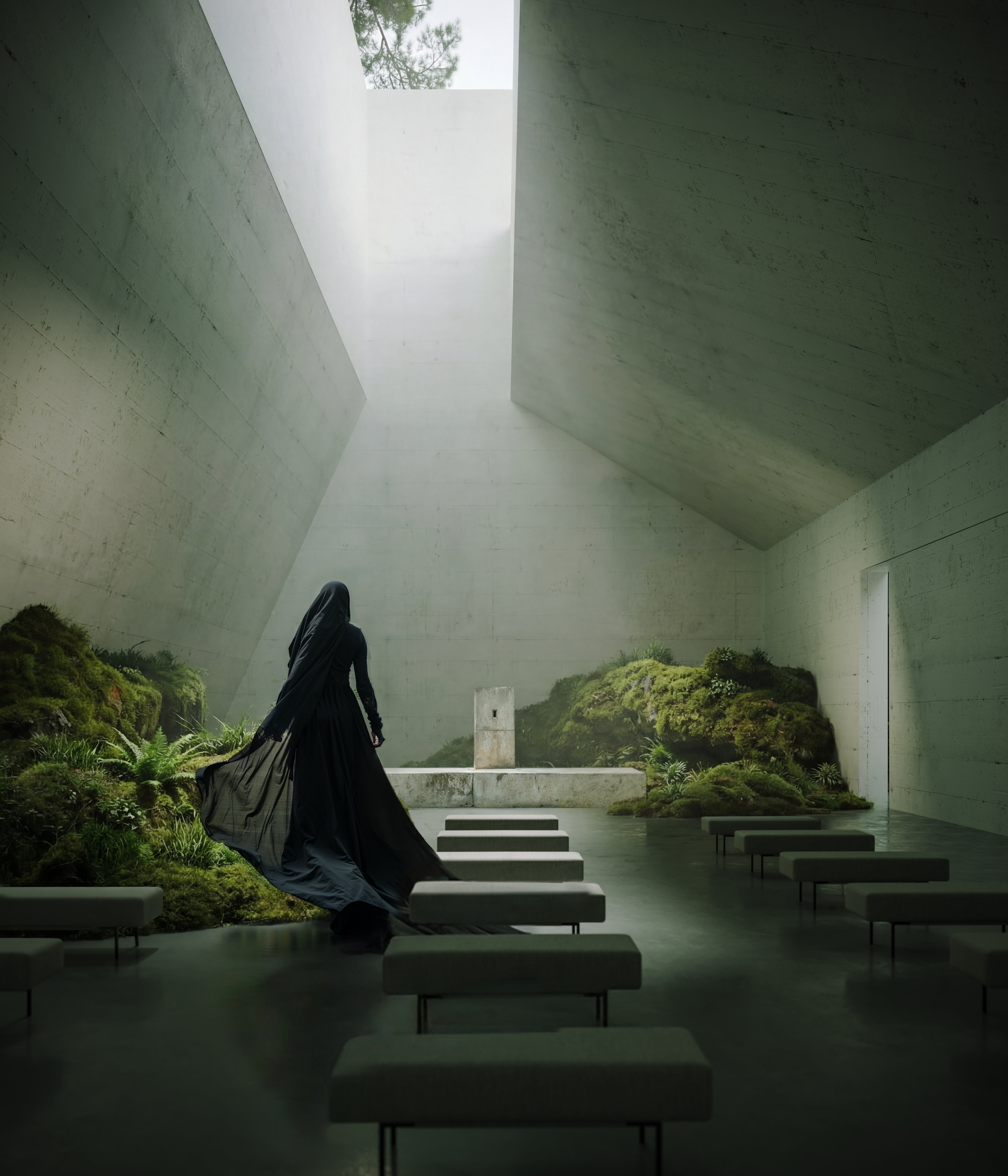
The aim of the visualisation was to express architecture as a quiet, emotional framework for mourning and reflection, where built form does not dominate the landscape but gently dissolves into it. The crematorium and cemetery are conceived as a sequence of minimal, concrete volumes embedded in the hillside, creating a spatial experience defined by slowness, silence, and intimacy. Rather than monumental gestures, the project relies on restraint — allowing nature, light, and time to become the primary materials of perception.The composition of the scene emphasizes the fragile balance between human presence and natural environment. The overcast sky, muted palette, and softened light reinforce a sense of suspension and contemplation, while the surrounding grasses and dense vegetation blur the boundary between architecture and landscape. The human figure is deliberately small and withdrawn, becoming part of the landscape narrative rather than its focal point.At the core of the project lies the idea of continuity — both physical and symbolic. The architecture supports a new ritual of remembrance, in which burial is transformed into an act of regeneration, and grief is gently redirected toward cycles of nature. In this way, the project proposes architecture not as a final form, but as a living mediator between loss, memory, and the quiet persistence of life.